THE IDEA
Keep up with talk
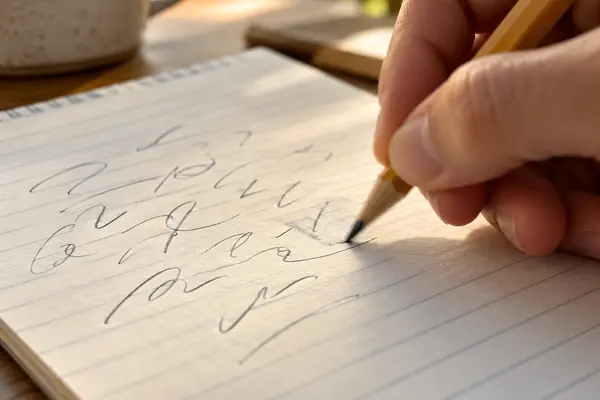
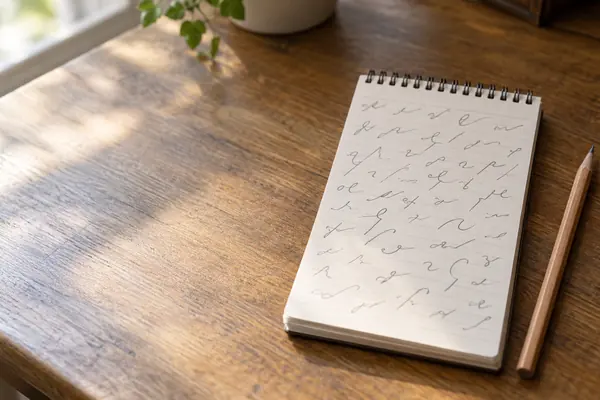
Shorthand lets you write down speech as it happens. Journalism trainees aim for 100 words per minute, the industry standard.
See the numbers doodleshort
HOW IT WORKS
Shorthand is handwriting stripped to the bone.
Compare the systems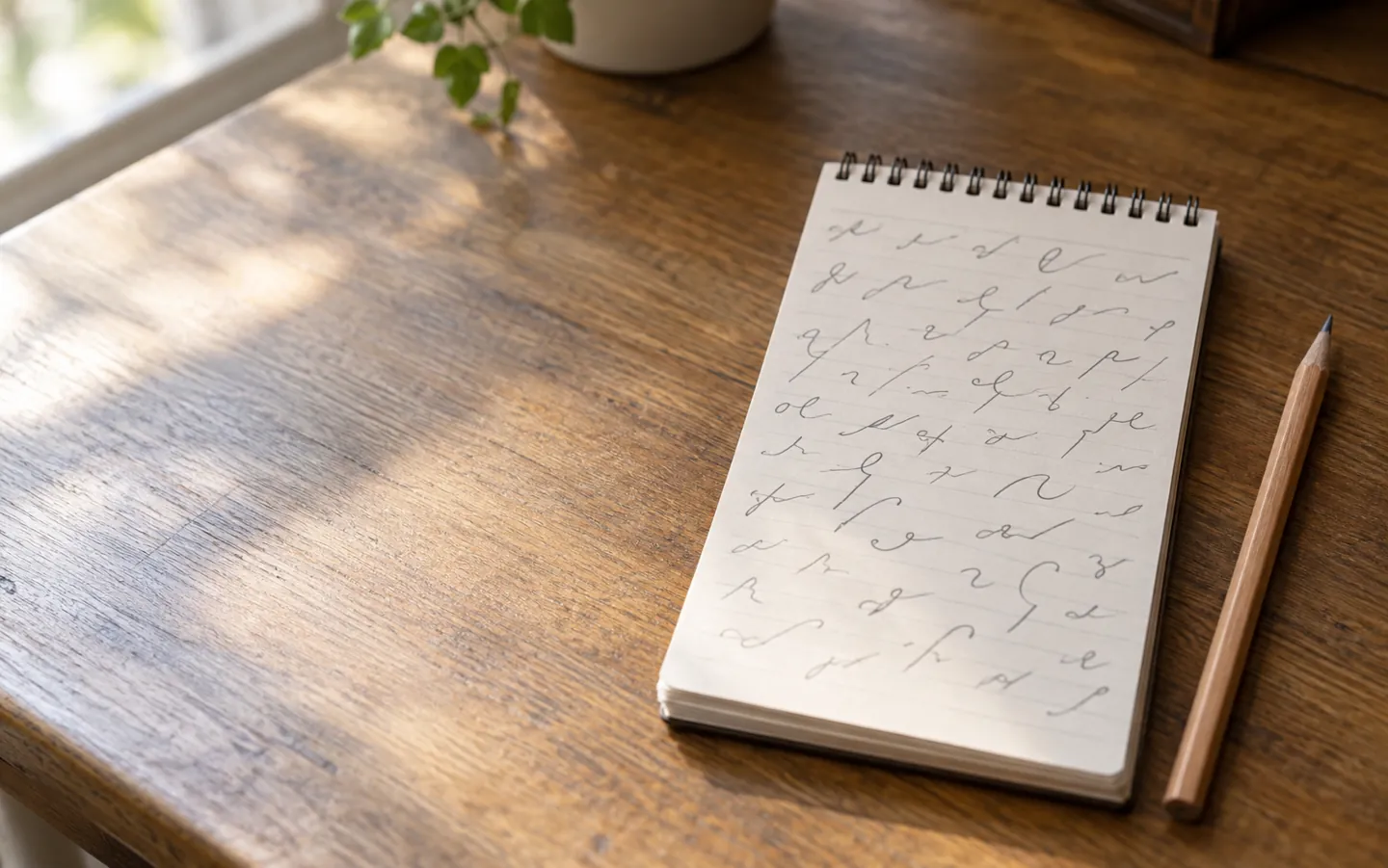
100 WPMthe newsroom standard
Instead of every letter, you write the sounds or the skeleton of a word in quick strokes. Two systems dominate in the UK: Pitman, from 1837, and Teeline, from 1968, which journalism trainees still learn today.
At a glance
100 wpm
Speed needed for journalism certification
Teeline is the recommended system of the National Council for the Training of Journalists, and 100 words per minute is the speed trainees work towards.
THE STANDARD · NCTJ
150 wpm
Speeds possible with Teeline
Teeline users can reach up to about 150 words per minute, helped by building their own groupings for common words and phrases.
THE CEILING · TEELINE
TWO NUMBERS WORTH KNOWING
One figure trainee journalists aim for,
one on what Teeline can reach.
Teeline was recommended to the NCTJ in 1968. In 2021 ownership passed to the NCTJ, which brought the system out of copyright for public benefit.
A QUICK SYSTEM CHECK
Pick a system to see how it works. The bar shows roughly how much there is to learn, based on how each system is described.
Based on reference descriptions of Pitman and Teeline shorthand and their versions.
THE SHORT ANSWER
Every shorthand trades longhand letters
for something quicker to write.
THE IDEA
Shorthand lets you write down speech as it happens. Journalism trainees aim for 100 words per minute, the industry standard.
See the numbersTEELINE
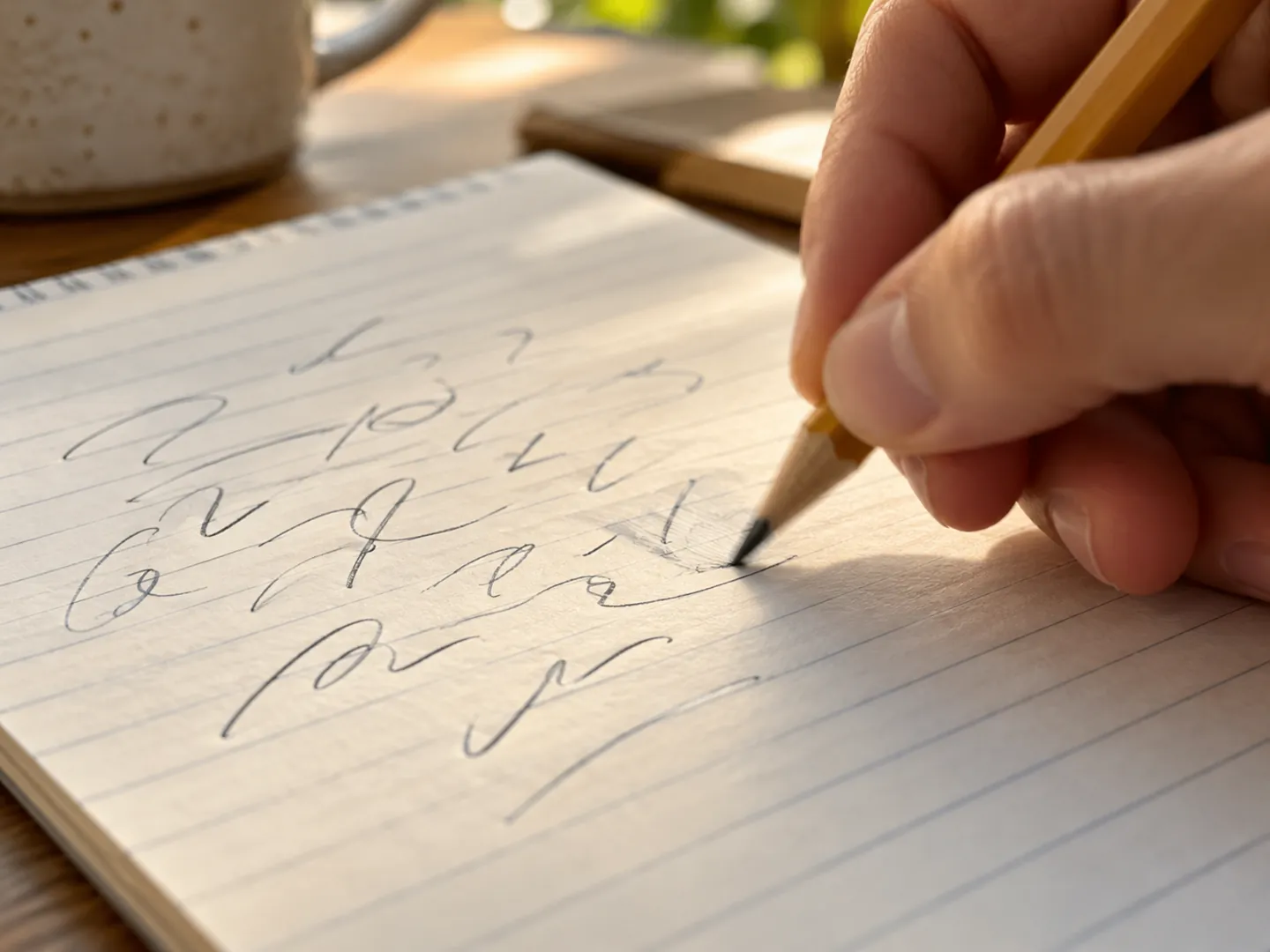
Teeline is based on the alphabet. It drops most inner vowels and silent letters and turns common groups like 'ing' into one symbol.
Compare the systemsPITMAN
Pitman writes sounds. Pairs like p and b differ only in stroke thickness, so it was first written with flexible-nibbed pens.
How to start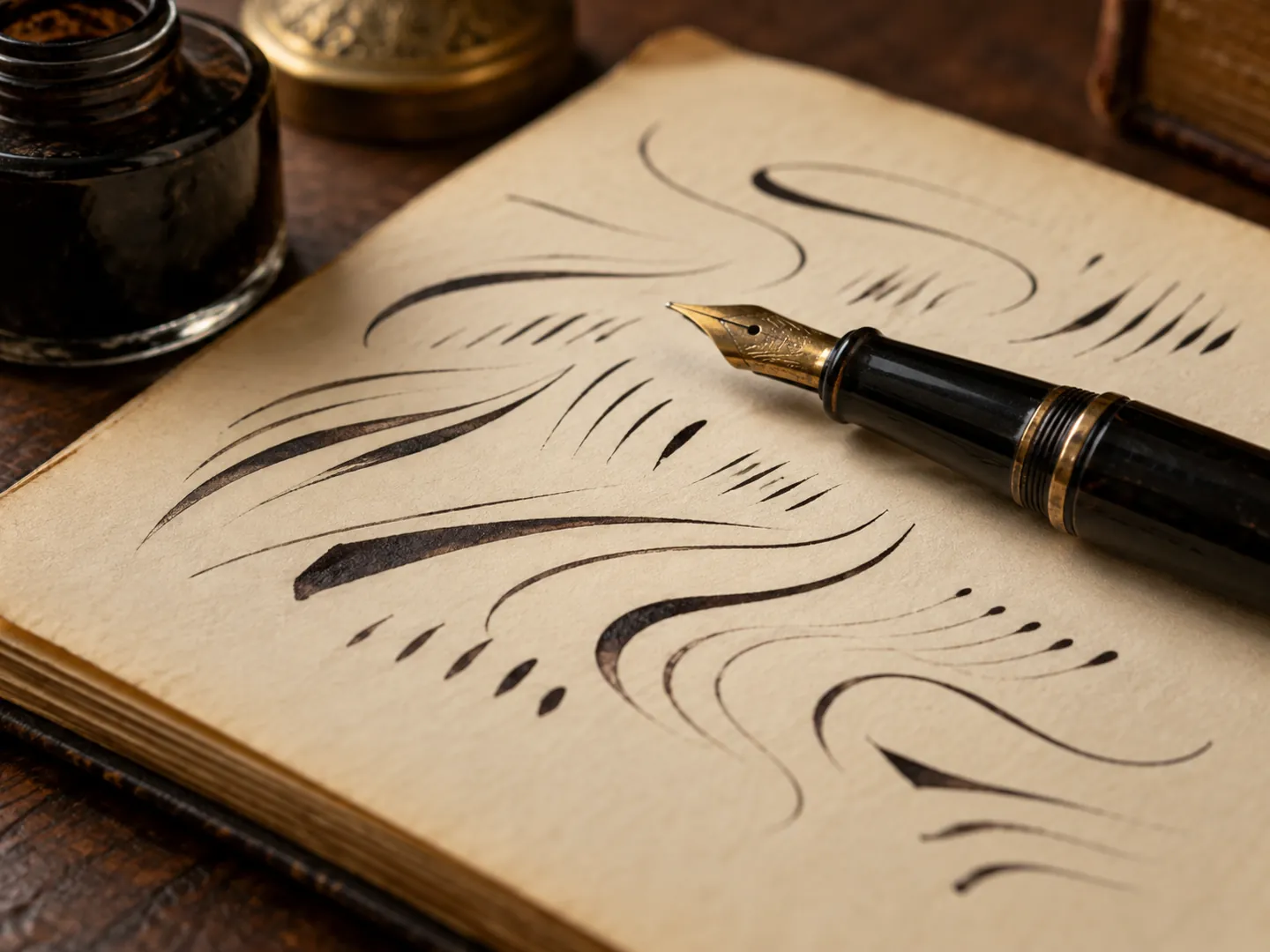
FOUR STEPS TO START
Those who use shorthand say the early slog pays off and the skill tends to stay with you. These steps follow how Teeline is built.
Start with the Teeline letter forms, each a stripped-down version of a cursive letter.
Leave out vowels that are not the first or last letter, and ignore silent letters.
Learn single symbols for common groups like 'sh' and 'ing', and common prefixes and suffixes.
Practise to dictation and add your own word groupings as you go.
WHY IT STILL MATTERS
Under the Contempt of Court Act 1981, using a sound recorder in a UK court without the court's permission is a contempt of court. Notes by hand are often the only record a reporter can take.
Shorthand is also a backup when technology fails, and people in marketing and other professions say they use it in meetings. Its roots go back to Roman times, when scribes took down speeches in the Senate.
Questions
Pitman is phonetic: it writes sounds, using thick and thin strokes and vowel dots. Teeline is spelling-based: it uses simplified letters and leaves out most inner vowels and silent letters.
Journalism trainees aim for 100 words per minute, and Teeline users can reach up to about 150. Symbol-based systems can in theory go faster still.
Yes. In the UK, Teeline is now more commonly taught and used than Pitman, and is the system recommended by the National Council for the Training of Journalists.
Recorders can fail, and in a UK court using one without permission is a contempt of court under the Contempt of Court Act 1981.
Teeline was developed by a Pitman teacher in Bradford and recommended to the NCTJ in 1968. It was brought out of copyright in 2021.
Sources
ABOUT THIS NAME
doodleshort.com is part of the DoodleSale portfolio. It isn't in an auction right now, but you can ask about leasing it.